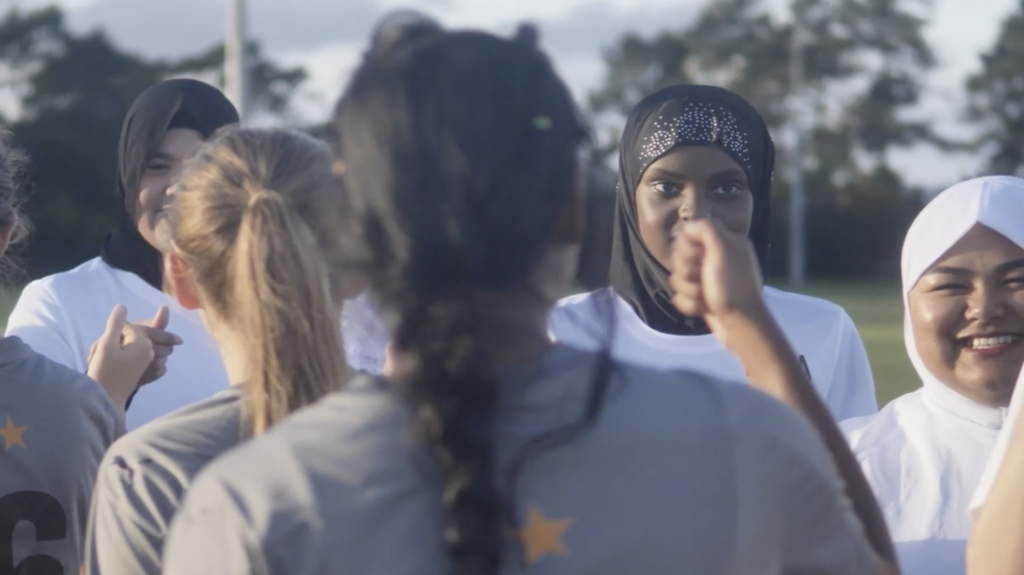
Ahead of the 2026 World Cup in Seattle, organizers are developing a new #SheBelongs program to connect refugee and local girls through soccer.
When some girls arrive to play on #SheBelongs teams, they have never met a teammate who wears a hijab. That changes quickly once they step onto the same field.
The non-profit #SheBelongs program is a way to find common ground on the field, said Kathy Shireman-King, director of the Washington Youth Soccer Foundation. Inspired by the program’s success in Utah, she and other organizers are working to launch a Washington chapter amid the buzz surrounding the 2026 FIFA World Cup.
“The whole point really is to create a fairer, more equitable, safer world for girls through the world’s sport,” said Adam Miles, founder and CEO of Refugee Soccer and #SheBelongs. “I think it’s beautiful in the way that it just binds humans together.”
#SheBelongs is a program created in Salt Lake City, with teams made up of half local and half refugee girls, ages 14-18. According to organizers, the program differs from traditional youth soccer leagues by placing greater emphasis on relationship-building and cultural exchange than on competition. For #SheBelongs, it’s about the community and empathy that come from bringing people from different backgrounds together.
“It’s not about creating the most winning team,” said Shireman-King. “It’s not about necessarily creating amazing players. It is about what happens when you meet on the soccer pitch.”
Nearly 20% of Washington residents were born outside the United States, and the state ranks among the nation’s largest refugee-resettlement states, according to the Seattle Office of Information and Regulatory Affairs. As refugee populations grow in communities such as Renton and Kent, organizers say opportunities for cross-cultural connection become increasingly important. After seeing the program’s success in Utah, Shireman-King believes the Seattle area could benefit from a similar model that brings refugee and local girls together for practices and community-based matches.
“Being in Renton, we’re one of the first areas of the state that immigrant populations come to when they come to be relocated in Washington,” Shireman-King said. “We know what it’s like to see lots of different cultures, hear lots of different languages.”
While the program remains in its early stages, funding, trust-building, and transportation access remain key challenges, Shireman-King said. Refugee communities often face barriers to transportation, cost, and access to organized sports, particularly for girls.
Kevin Long, an attorney volunteering with the project, said refugee families often face layers of isolation after arriving in the United States.
“You have economic barriers, language barriers, cultural barriers,” he said. “All these things are stacked up for failure.”
Long said that programs like #SheBelongs can create opportunities for community building.
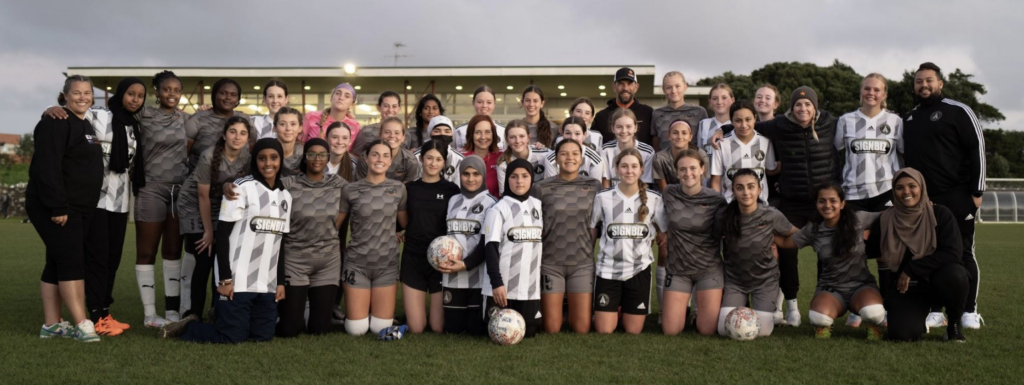
Organizers see the 2026 World Cup as both an opportunity and a challenge. While Seattle is expected to welcome hundreds of thousands of visitors during the tournament, Miles said many local immigrant and refugee families may be unable to attend matches due to the cost of tickets and travel. He said programs such as #SheBelongs can help bring the spirit of the tournament into local communities through participation rather than spectatorship.
As the World Cup arrives in Seattle, organizers say there is a contrast between the global spectacle surrounding FIFA and the accessibility that has historically made soccer “the world’s game.” With high ticket prices and travel concerns for some immigrant and refugee communities, supporters of #SheBelongs Washington hope to preserve soccer’s role as a community gathering place.
“Soccer is the world’s most accessible sport, but not in the way FIFA’s doing it,” Miles said. “How do you still preserve the binding power of soccer to bring the world together?”
As the costs associated with elite soccer continue to rise, Miles and Shireman-King emphasize a different side of the sport: its ability to bring people together. Organizers hope the future Washington chapter will help refugee girls build community, form friendships, and feel a greater sense of belonging in their new homes.
Long described the program as “bridge building,” with soccer serving as the common language.
“The canvas is the pitch and the soccer ball,” he said. “Can they build friendships and community through the game?”
Organizers hope the answer is yes, not just during the 2026 World Cup buildup, but long after the tournament leaves Seattle.
“You find commonality that crosses language, culture, religion, and all sorts of different backgrounds,” Shireman-King said. “You begin to recognize that you have this amazing connection with somebody you didn’t necessarily recognize before. Now they’re playing soccer together, trying to understand each other’s culture and life experiences, and welcoming each other into those spaces.”
This story comes from a partnership with University of Washington Department of Communication’s News Lab, where student reporters tackle stories for news outlets around the Puget Sound.